
Your culture isn't defined by what you say. It's revealed by what gets rewarded.
Every organisation has values. They appear on websites, in strategy documents, leadership programmes and employee communications.
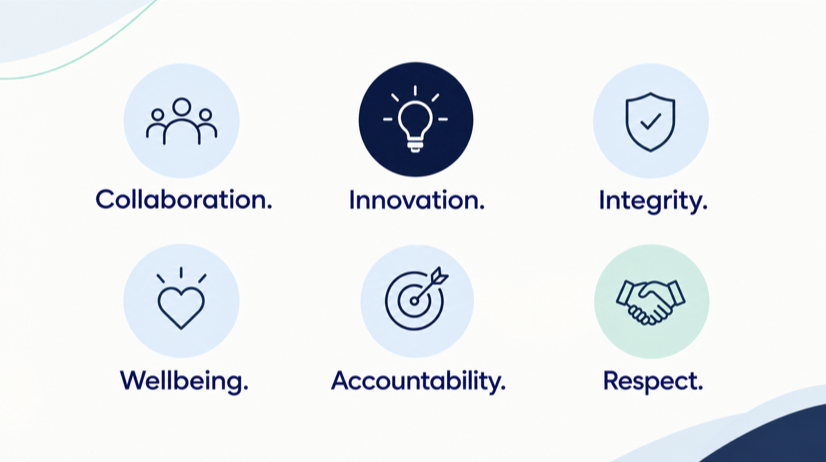
Most organisations genuinely believe in them. But employees don't learn culture from a values statement. They learn it by watching what happens; who gets promoted, recognised, listened to. Who gets given opportunities, what behaviour gets praised, what behaviour gets challenged.
And, perhaps most importantly, what behaviour gets tolerated.
Because there can be a significant difference between the culture an organisation intends to create and the culture its reward systems, leadership behaviours and everyday decisions actually create.
That gap is worth paying attention to.
WHAT WE SAY MATTERS VS WHAT ACTUALLY MATTERS
Imagine an organisation that says collaboration is critical. But its performance management system primarily rewards individual results. Who is going to win? The value on the wall, or the incentive in the system?
Probably the incentive.
Now imagine an organisation that says wellbeing is a priority. But the people who consistently work late, respond to messages at weekends and take on additional work are the ones most visible to senior leaders. The organisation doesn't need to tell employees that overwork is valued.
They will work it out for themselves.
This is how culture develops. Not necessarily through deliberate decisions. Often through thousands of small signals.
THE UNINTENDED CONSEQUENCES OF REWARD
Reward doesn't just mean bonuses. It includes anything that gives a behaviour positive reinforcement.
• Recognition
• Promotion
• Pay
• Career opportunities
• Access to senior leaders
• Autonomy
• Status
• Even attention
If a particular behaviour consistently produces positive consequences, people are likely to notice and other people may copy it.
This can create a powerful feedback loop:
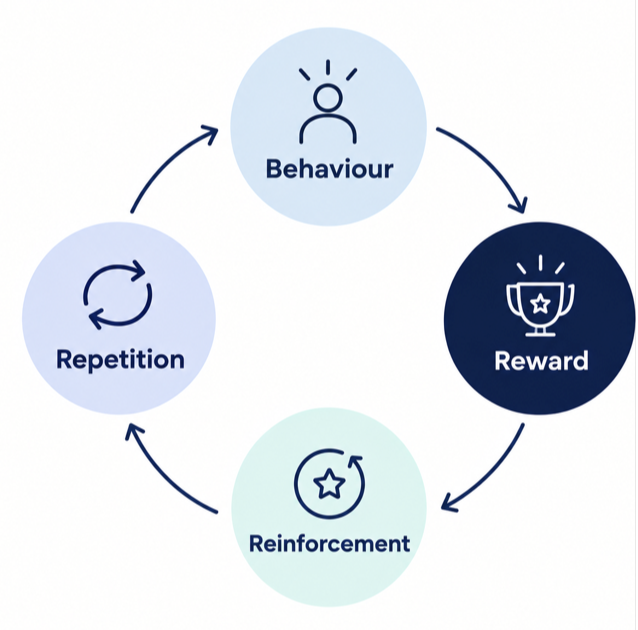
Over time, the behaviour becomes normal. And once something becomes normal, it becomes much harder to see.
That's when an unintended culture can become embedded.
THE HIGH PERFORMER PROBLEM
Consider the employee who delivers exceptional results but leaves a trail of damaged relationships behind them.
They miss deadlines? Rarely.
They hit targets? Consistently.
They create conflict? Frequently.
They undermine colleagues?
Perhaps.
But because their individual performance is strong, the behaviour is tolerated. What message does that send to everyone else? It tells employees that results can outweigh behaviour.
And once that becomes understood, other people adapt. Some may copy the behaviour. Others may disengage. Some may decide the environment isn't for them and leave. The organisation may continue to call collaboration a core value. But employees have already learned the real hierarchy:
Results first. Behaviour second.
This isn't necessarily a conscious leadership decision.
It is a consequence of what has been reinforced.
WHAT HAPPENS WHEN THE WRONG BEHAVIOURS ARE REWARDED?
The consequences aren't always immediate. That's what makes this difficult. You may not see a direct line between a leadership behaviour and a performance outcome. Instead, you see smaller signals.
• People stop challenging decisions
• Managers become more reluctant to address difficult behaviour
• Teams become more defensive.
• High performers become frustrated
• Employees become less willing to take risks
• People do what they believe will protect their position
• Employees become less willing to take risks.
• Collaboration becomes transactional.
• And eventually, performance can suffer
The organisation hasn't necessarily made one catastrophic decision. It has simply reinforced the wrong behaviours repeatedly.
Culture can drift one reward at a time.
WHAT DO WE SAY WE VALUE?
This is the first question. But it needs to go beyond the words. Take your organisation's stated values and translate them into observable behaviours.
➢ If you say collaboration, what does that actually look like?
➢ If you say accountability, what does it mean when someone gets something wrong?
➢ If you say innovation, what happens when an experiment fails?
➢ If you say wellbeing, what happens when a high-priority project requires additional effort?
➢ If you say inclusion, whose voices are actually heard when important decisions are made?
Values become meaningful when employees can see what they look like in practice.
WHAT DO WE ACTUALLY REWARD?
This is the harder question. Look at the people who are succeeding;
What behaviours are helping them succeed, Who gets promoted?
Who gets the best opportunities?
Who receives recognition?
Who has influence?
What behaviour is celebrated by senior leaders?
Then look at the answer alongside your stated values. You may find alignment. You may also find some uncomfortable gaps.Perhaps the organisation says it values teamwork but consistently rewards individual achievement. Perhaps it says it wants sustainable performance but rewards constant availability. Perhaps it wants people to challenge thinking but promotes those who create the least friction.
These gaps are important.
Because employees respond to the real incentive structure, not the intended one.
WHAT DO WE TOLERATE?
This may be the most revealing question of all. Because tolerance is also a form of reinforcement. If a senior employee consistently behaves badly but delivers strong results, what happens? If a manager creates unnecessary pressure but consistently hits their targets, what happens?
If a team repeatedly ignores organisational processes because “that's just how they work”, what happens? If leaders fail to model the behaviours they expect from others, what happens?
Every time an organisation chooses not to address a behaviour, it sends a signal. Sometimes there are good reasons for that decision. part of the culture.
What you tolerate tells people what the organisation is prepared to accept.
THE LEADERSHIP BLIND SPOT
Leaders are often too close to the culture they are trying to understand. They see the strategy, values and the leadership communications. They may see the headline employee survey results.
But employees experience something different. They experience the manager who cancels their one-to-one. The promotion decision that doesn't make sense. The colleague who gets away with poor behaviour. The meeting where challenging the executive isn't welcomed. The project where working late becomes expected.
These experiences create an informal rulebook. And that rulebook can be more powerful than the official one.
The culture of an organisation is often clearer to employees than it is to its leaders.
LOOK AT THE SYSTEM, NOT JUST THE PEOPLE
When leaders discover an unwanted behaviour, the instinct can be to ask:
“Why are people behaving like this?”
Sometimes the better question is:
“What is the organisation doing that makes this behaviour rational?”
If people compete rather than collaborate, examine the incentives. If managers avoid difficult conversations, examine what happens when they have them. If employees don't speak up, examine how challenge is received. If people work excessive hours, examine what the organisation rewards and how workload is managed.
If short-term targets consistently override long-term capability, examine how performance is defined.
Behaviour doesn't exist in a vacuum.
Systems shape behaviour.
A FIVE-MINUTE LEADERSHIP EXERCISE
Take one of your organisation's stated values.
Write it at the top of a page.
Then ask five questions:
1. What behaviour does this value require?
Make it observable.
2. How would an employee know that behaviour is valued?
Look at everyday signals, not communications.
3. What behaviour currently gets rewarded instead?
Look at recognition, promotion, incentives and visibility.
4. What behaviour do we tolerate that contradicts the value?
Be honest.
5. What would we need to change to close the gap?
This could involve leadership behaviour, incentives, performance management, workload, processes or accountability. The objective isn't to produce another set of values.
It's to identify where the organisation's systems and behaviours are reinforcing something different from what it says it wants.
FROM VALUES TO BEHAVIOURS
Values are important. But values alone don't change culture. They need to translate into behaviours. And behaviours need to be reinforced consistently. That means leaders need to think about the entire chain:
INSERT “CHAIN” GRAPHIC
What do we say?
↓
What do we expect?
↓
What do we reward?
↓
What do we tolerate?
↓
What do people learn?
↓
How does that influence performance?
When those elements align, culture becomes more intentional. When they don't, employees fill the gap themselves.
THE PULSE POINT PERSPECTIVE
Culture isn't created in a workshop. It is created through repetition.
The same decisions à The same signals à The same behaviours à The same rewards.
Over time, those patterns become “how things are done around here”.
This is why understanding culture requires more than asking employees whether they like the organisation.
It requires looking at the relationship between what leaders intend, what employees experience and what the organisation reinforces.
Workforce data can help identify where those patterns may be emerging. Employee experience can help explain what they feel like on the ground. And organisational performance can help show where they may matter.
The objective isn't to find someone to blame. It's to understand the system.
Because if you want different behaviours, you may need to change more than the behaviour itself.
You may need to change what the organisation rewards.
ONE FINAL QUESTION
Take your organisation's most important stated value.
Now forget the values document.
Look at the last six months of promotions, recognition, performance conversations and leadership decisions.
Would an employee looking from the outside conclude that you genuinely reward the behaviour you say you value?
If not, that's not necessarily a failure.
But it is a signal.
And signals are where culture starts to change.



.png)