

Work-related stress isn’t a side issue anymore—it’s shaping how people experience their jobs every day.
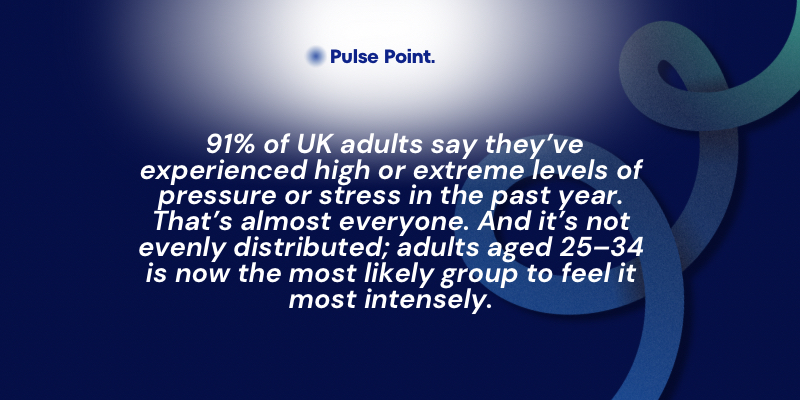
Right now, 91% of UK adults say they’ve experienced high or extreme levels of pressure or stress in the past year. That’s almost everyone. And it’s not evenly distributed; adults aged 25–34 is now the most likely group to feel it most intensely.
You can see the impact in the workplace. One in five UK workers has taken time off in the last year due to stress or pressure affecting their mental health. But what stands out is what happens next: 27% of those employees say they didn’t receive any support when they returned to work.
That gap matters.
More broadly, one in five adults in England is living with a mental health problem, and 82% say their mental health has negatively affected their work in the past year. So, this isn’t just about absence, it’s about how people are functioning while they’re at work too.
There’s also a pattern around how people interpret their own struggles. One in three adults felt their mental health problems weren’t serious enough to seek help from a GP. Many are effectively deciding to “push through,” even when something isn’t right.
Stigma still plays a role in that decision. When asked why they didn’t seek help, people pointed to concerns about how they’d be perceived by the following groups:
➢ 23%worried about their GP and other healthcare professionals
➢ 19%worried about family or friends
➢ 10%worried about colleagues or employers
That last figure is worth paying attention to. While it’s lower than the others, it suggests that work isn’t always seen as a safe place to be open about mental health.
None of this is particularly dramatic on its own. But taken together, it shows a consistent picture: high levels of stress, people trying to manage it quietly, and support that doesn’t always meet them where they are.
For workplaces, the question isn’t whether this is happening, it clearly is. The question is how visible it is, and how it’s being handled when it shows up.
Because in many cases, the signs are there early. They just don’t always get recognised or addressed until they escalate.
And by then, it’s harder for everyone involved.
Learn more about how Pulse Point can help.
Sources:
Mental Health UK Burnout Report2025 (Registered Charity Number 1170815) ; Mind The BigMental Health Report 2025 (Registered Charity Number 219830)




.png)